Septic help that looks before it prescribes
Selling a house, seeing a problem, or overdue for routine care — it starts with an evaluation and ends with findings in plain English.
Septic services in Worcester, MA tend to get called for three reasons, and this site is organized around them.
The first is a home sale. Massachusetts requires a septic inspection when most septic homes change hands, so buyers, sellers, and their agents arrive with a closing date already on the calendar. That work lives on the real estate septic inspection page, scheduled around the deal.
The second is a problem. Slow drains, a backup, an odor, an alarm, a soggy stretch of lawn. Our guide to the signs of septic trouble sorts out what each one can mean, and none of them gets diagnosed from a driveway here.
The third is routine care. Pumping the tank on schedule is the habit that protects the drain field, and it matters more on the older systems this county is full of. Plenty of owners also simply want to know what condition their system is in, especially after buying a house that came with a shrug instead of records.
All three start the same way: with an evaluation that opens the system up and looks. Not a guess, not a quote written in the truck. The tank gets opened, the levels get read, the drain field gets checked, and you get findings you can act on, whatever they turn out to be. Look first, then prescribe. It is a simple order of operations, and it is surprisingly rare in this trade. The pages below follow that same logic, from the plain-English tour of what is buried in your yard to what each service actually involves.
Three reasons people call, three places to start
-
Buying or selling a home
Massachusetts ties a septic inspection to the sale, and the closing date sets the schedule.
Read more -
Something seems wrong
Backups, odors, alarms, and wet ground get evaluated before anything gets prescribed.
Read more -
Time for routine care
Pumping on schedule is the cheapest habit a septic home has.
Read more
Our Services
-
Septic Inspections
A proper inspection opens the system up and looks: tank condition, components, levels, and how the drain field is taking water.
Learn more
-
Real Estate Septic Inspections
Buying or selling a home on septic usually means the system gets inspected, often on a deadline.
Learn more
-
Septic Tank Pumping
Routine pumping removes the solids the system can't break down. It's the single most important maintenance a septic system gets.
Learn more
-
Septic Repairs
Lids, baffles, filters, distribution boxes, pumps, floats, alarms: the components that fail before the system does.
Learn more
-
Drain Field Repair & Restoration
The drain field is where most septic systems actually fail, and where the biggest repair decisions get made.
Learn more
-
Septic System Replacement & Installation
When a system is truly at the end of its life, replacement is a designed, permitted project rather than a bigger repair.
Learn more
-
Septic Maintenance & Compliance Checks
Some systems, and some jurisdictions, call for inspections on a recurring schedule instead of only when something goes wrong.
Learn more
What is actually under the yard
Most septic owners have never seen their system, so here is the thirty-second tour.
One buried pipe carries everything from the house to the septic tank, a watertight box where physics does the first job. Solids sink, grease floats, and bacteria chew slowly through what settles. The liquid in the middle flows on to a distribution box, which splits it between perforated pipes in gravel trenches. That network is the drain field, and the living soil beneath it does the real treatment, filtering and consuming what the water carries before it percolates away.
The part worth remembering: the drain field is where septic systems live or die. Tanks are simple and long-lived. Fields depend on soil that can keep absorbing, and soil that gets overloaded with water or fed escaped solids eventually quits. Nearly every expensive septic story ends at the field, which is why so much of the cheap, boring maintenance exists to protect it.
Around Worcester the housing stock runs the full range: conventional gravity systems on the older lots, pumped systems where the field sits uphill, and advanced treatment units on tight or wet sites that could not pass any other way. The full plain-English guide to how septic systems work walks the whole path with a diagram.
How an evaluation typically goes
- 1
Locate and open the tank
The access gets found and uncovered, with or without records to work from.
- 2
Assess components and levels
Sludge and scum depth, baffles, filters, and any pump gear, read while the tank is open.
- 3
Check the drain field area
The field gets walked and evaluated for how it is taking water.
- 4
Findings reviewed with you
What was seen, what it means, and the options, in plain English with no obligation.
Buying or selling a home on septic? The inspection works best scheduled early, not the week of closing.
Signs a septic system is asking for attention
-
Slow drains
Through the whole house, not just one sink.
-
Gurgling plumbing
Air working backward after flushes or laundry.
-
Sewage odor
Near the tank, over the field, or drifting indoors.
-
Wet or lush patches
Ground over the field that stays soggy or oddly green.
-
Backups
Wastewater returning in the lowest drains.
-
Alarm sounding
A pumped system's early warning, on purpose.
Septic around Worcester, specifically
Worcester itself is mostly a sewer city. The DPW’s collection system carries wastewater to the Upper Blackstone treatment plant in Millbury, and the triple-deckers and streetcar neighborhoods never touched a septic tank. Septic here lives at the edges, on the outskirt roads and larger lots where the sewer mains stop, and in the ring of towns around the city: Holden, Paxton, Leicester, and the rest, where septic is the default rather than the exception.
The ground those systems sit in is the local story. Most of Worcester County rests on glacial till, stony soil over a dense hardpan layer, the same Paxton soil series that was first mapped one town over and later named the official state soil of Massachusetts. Hardpan perches water. Every spring the seasonal water table rises, marginal drain fields lose their margin, and the calls start: wet lawns in April, backups after the first big thaw. Systems that behave all summer get honest in March.
Oversight is town-by-town. Massachusetts has no county health departments, so each board of health enforces the state’s Title 5 code locally, and the watershed towns north of the city, where the Wachusett Reservoir’s tributaries run, watch septic systems more closely than most homeowners expect.
As for what actually comes up: transfer inspections on a deadline, tanks that went a decade without pumping after a house changed hands, failed baffles on postwar systems, and spring drain field complaints that turn out to be everything from a clogged filter to a field at the end of its life. The pattern repeats enough that looking first is not a slogan here. It is the only approach that keeps matching this housing stock.
Areas We Serve
- Worcester
- Shrewsbury
- Auburn
- Millbury
- Holden
- West Boylston
- Grafton
- Leicester
- Paxton
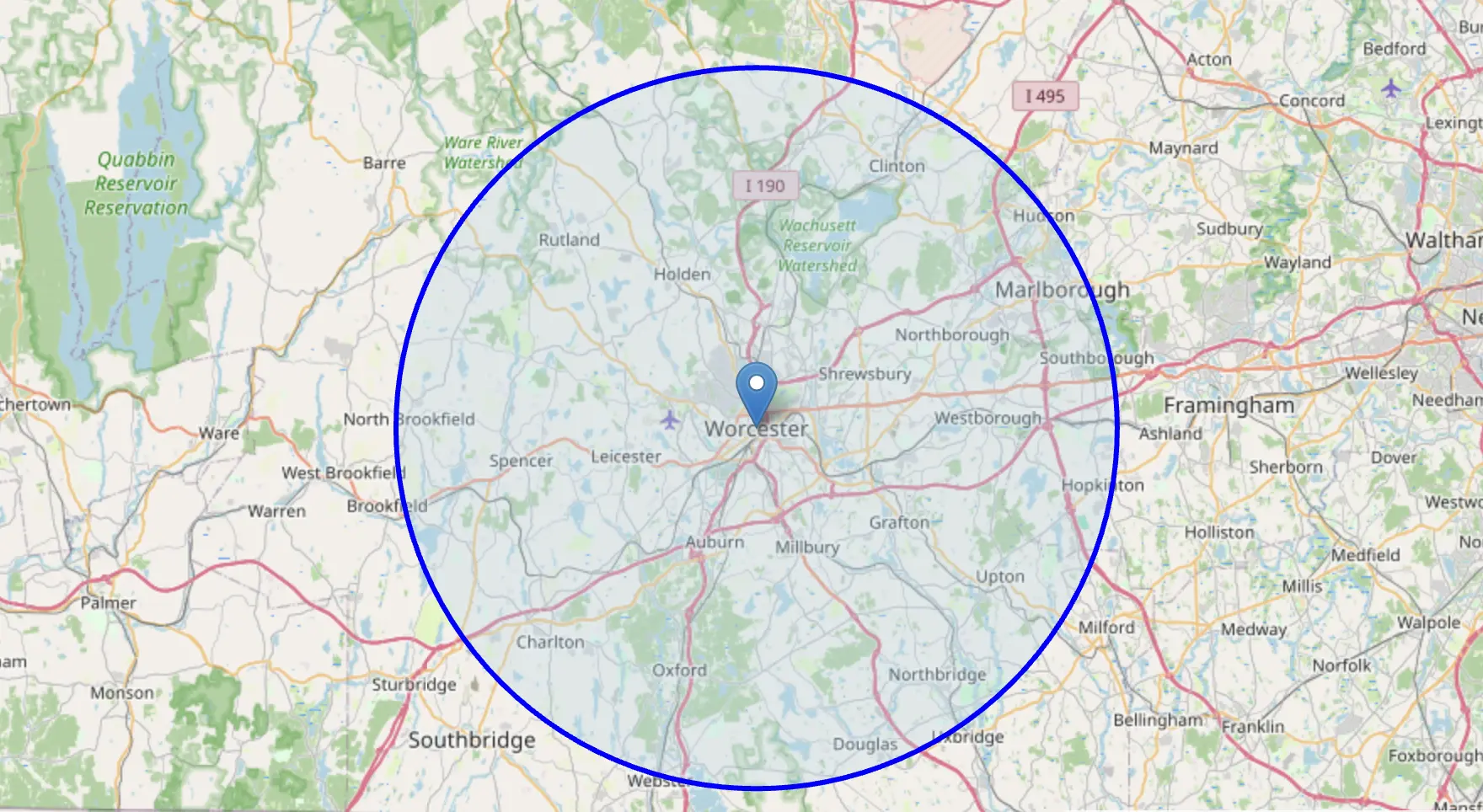
Find local details for each community on our service-area pages.
Frequently Asked Questions
How often does a septic tank need to be pumped?
There's no single interval. Health departments commonly cite a few years between pumpings, but the right schedule depends on the system type, the tank size, how many people live in the home, and any local rules. A tank that gets evaluated regularly ends up on the schedule that fits it instead of a rule of thumb.
What does a septic inspection involve?
A thorough inspection typically starts with locating and opening the tank, then assessing its condition, components, and levels, and evaluating how the drain field is taking water. Findings are documented so you can see what was checked and what it means. Scope varies with the system and the reason for the visit, and it's confirmed up front.
Is a septic inspection required to sell my house?
It depends on where you are. Some states and counties require a septic inspection or pumping when a property changes hands, while in other places it's driven by the buyer or the lender. Your local health authority is the source of record, and the requirement question usually gets settled early in the transaction.
Do wet spots in the yard mean my drain field has failed?
Not necessarily. Wet or unusually lush patches over the field can point to drain field trouble, but they can also trace to a component issue upstream or to surface drainage that has nothing to do with the septic system. An evaluation settles which one it is before any big decisions get made.
What does it mean when the septic alarm goes off?
An alarm usually signals a high water level or a pump issue on systems that use one. It calls for prompt attention, but it rarely means an emergency is underway. Cutting back water use and having the system looked at soon is the sensible response.
Can septic problems be fixed without replacing the system?
Often, yes. Lids, baffles, filters, distribution boxes, pumps, floats, and alarms all wear out long before a whole system does, and many problems trace to one of them. An evaluation tells whether you're looking at a component repair or something bigger.