How a Septic System Works: A Plain-English Guide
You own a wastewater treatment plant. It is buried in your yard, it runs with no moving parts or almost none, and odds are nobody has ever explained it to you.
That is normal. Around Worcester, most people who buy a septic home get a one-line handoff: “the tank’s out back.” Then the system runs silently for years, and the first real education arrives with a problem, or with a Title 5 inspection at sale time. Neither is a good classroom, because both come with a bill attached and a decision due.
This guide is the plain-English version, before anything goes wrong. How the water moves, what each part does, and why the drain field, the part nobody can see, is the part that matters most. Ten minutes here covers what most owners learn one expensive surprise at a time. If you want the federal version of the same tour, the EPA’s overview of how septic systems work is the standard reference; this one stays local.
Understanding it pays off in real decisions. You will know why pumping the septic tank on schedule is cheap protection for an expensive component. You will know what an inspection is actually checking. And when someone hands you a scary diagnosis or a big quote, you will know which questions to ask before you sign anything.
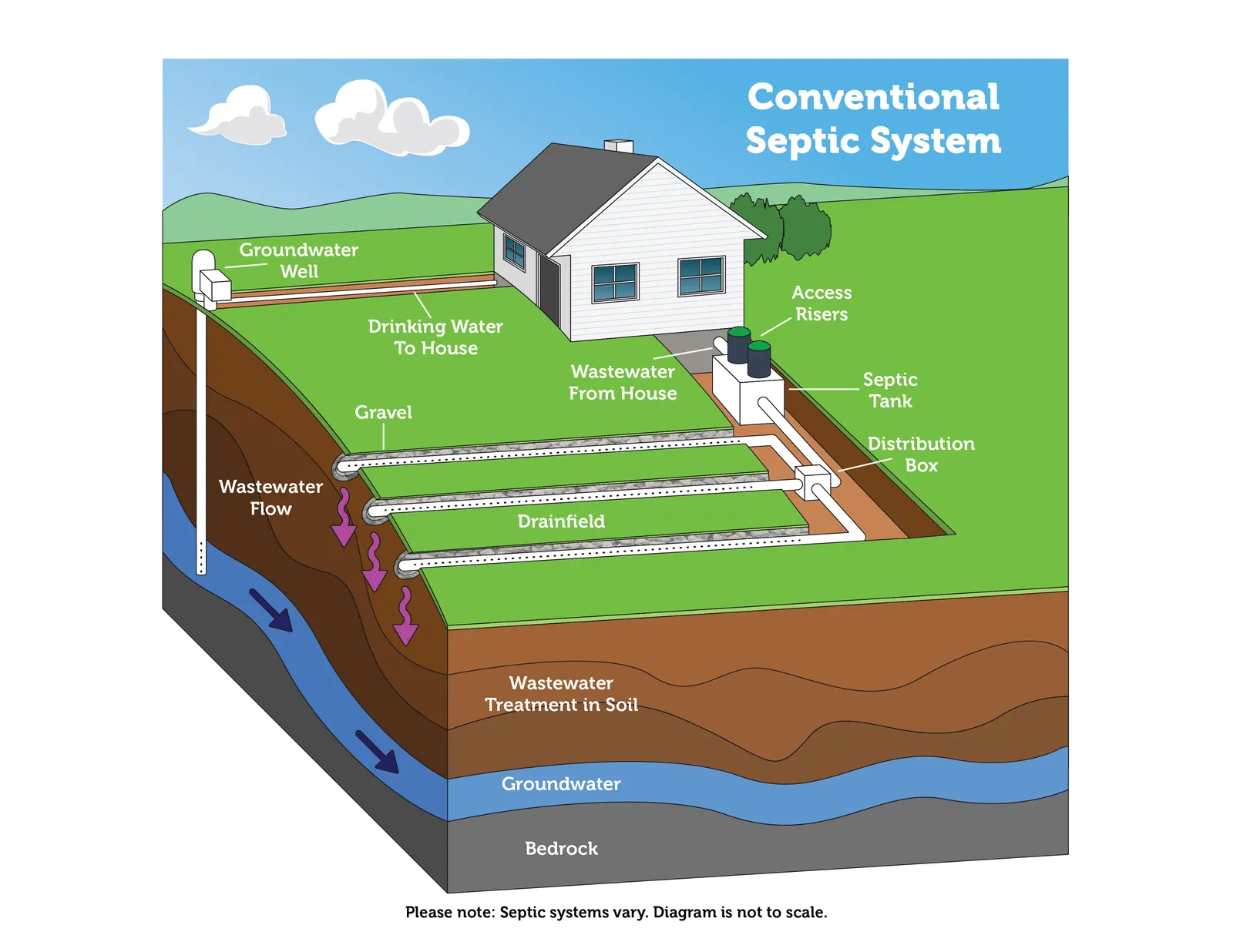
Follow the water
Start at your kitchen sink. Everything you send down a drain or flush leaves the house through a single buried pipe. On a conventional system, gravity does the work from here.
That pipe empties into the septic tank, a buried watertight box, usually concrete, often 1,000 to 1,500 gallons. The tank’s job is separation, and it happens on its own. Solids sink to the bottom and form a sludge layer. Grease and anything lighter than water float to the top as scum. The liquid in the middle, called effluent, is what moves on. Bacteria in the tank slowly digest some of the solids, but never all of them. The rest just accumulates. That is the whole reason pumping exists.
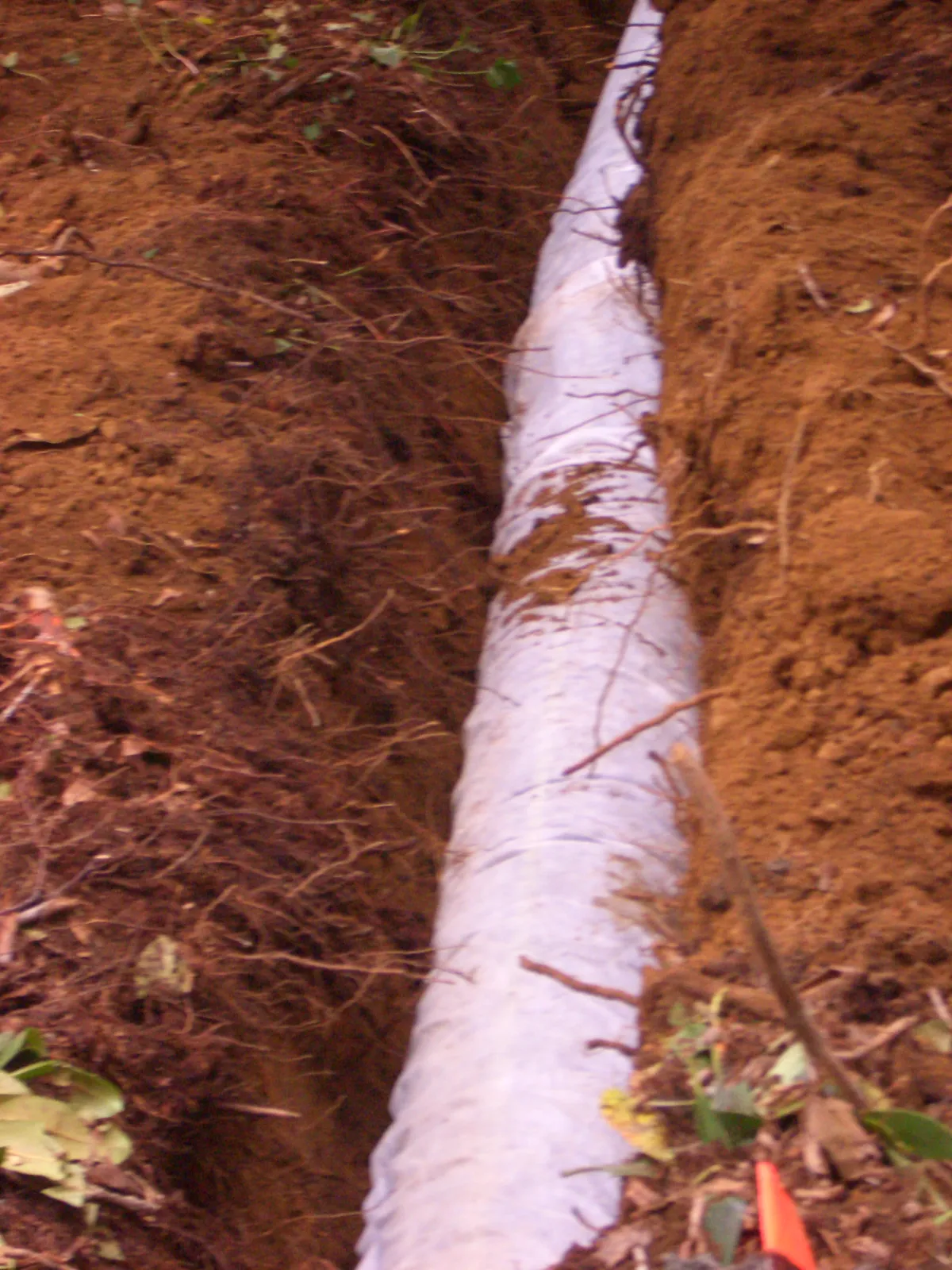
From the tank, effluent flows to a distribution box, a small chamber that splits the flow evenly into several perforated pipes. Those pipes run through gravel-filled trenches in your yard. That network is the drain field, also called a leach field.
The drain field is where treatment actually happens. Effluent trickles out of the pipes, through the stone, and into the soil. The top layers of soil are alive, and the microbes there consume the pathogens and nutrients in the wastewater. By the time water percolates down toward the groundwater, the soil has finished the job the tank started.
It is also where systems die. A biological mat naturally forms where effluent meets soil, and it thickens over the years until the soil can’t absorb water as fast as the house sends it. Send solids or grease out of a neglected tank, or more water than the field was sized for, and the mat wins early. A field that can’t absorb pushes water somewhere else, which is when people notice soggy grass or slow drains. An inspection reads those signals while there is still time to act on them.
Want to know what shape your own system is in?
Not every system is the gravity kind
The conventional gravity system is the baseline, but the industry uses a range of designs, and the property usually makes the choice.
When the drain field sits uphill from the house, a pump chamber lifts effluent to it. That is a pumped system, and it adds electrical parts: a pump, float switches, and an alarm. Pressure-distribution designs go further, using the pump to dose the whole field evenly instead of letting gravity favor the nearest trench. And where soil or space can’t do the treating, advanced-treatment units clean the wastewater mechanically before it reaches the soil. Massachusetts calls these innovative/alternative systems, and they typically carry ongoing inspection requirements as a condition of approval.
What dictates the design is mostly what is under the grass. Around Worcester County that means glacial till, with its stones, ledge, and dense hardpan layers that hold water in spring. Soil testing decides what a lot can support, and the local rules decide what gets approved. On the older housing stock here you will mostly find conventional gravity systems, with pumped systems common on hilly lots, and advanced units showing up on tight or wet sites where nothing simpler would pass.
What the anatomy tells you about care
Every part of the tour points at the same short list.
The tank collects solids forever, so pumping is the maintenance backbone. Skip it long enough and solids ride out to the drain field, which is trading a routine service for a five-figure component. How often depends on your tank and household, and the pumping frequency guide walks through the variables.
The field needs protection more than attention: keep vehicles off it, keep roof runoff away from it, and keep an eye on the grass above it.
And because the whole system works out of sight, a periodic evaluation is how problems get caught at the cheap stage. For the daily habits in between, the do’s and don’ts guide covers what should and shouldn’t go down your drains.