Septic Services in Grafton, MA
Grafton put a commuter rail station in a farm town, and its septic systems have been living with the consequences ever since.
The bones of the town are old New England: the common at the center, colonial and Federal-era farmhouses on the roads radiating out, and the mill villages of North Grafton and South Grafton along the Blackstone and Quinsigamond rivers. Grafton runs its own sewer system, with a treatment plant in South Grafton, and the village centers are largely on it. Everything between the villages, which is most of the town’s land, runs on septic.
Then came the growth. The MBTA station at North Grafton put Boston within commuting range, Tufts’ veterinary campus anchored the same end of town, and subdivisions have been filling in the old orchards and pastures for thirty years. The result is a septic population split by century: eighteenth-century farmhouses whose systems have been replaced, or not, on unknown schedules, and 1990s-to-2020s colonials whose builders’ systems are now hitting their first real age milestones.
Both halves generate the same two questions, for different reasons. On an old farmhouse, “what is actually buried out there?” is a genuine mystery, records may not exist, and the answer can be anything from a modern system to a cesspool. On a newer house, the question is quieter: whether a two-decade-old builder-grade system has been maintained or just occupied. In both cases the answer comes from an evaluation that opens the system, and in both cases the question tends to arrive attached to a sale, because Grafton’s rail access keeps its housing market moving.
What Grafton’s mix means for the work
Transaction inspections lead here, with a Grafton twist: the town’s price points and commuter demand mean buyers with financing, and financed deals do not close around septic question marks. A Title 5 inspection scheduled early protects the timeline on both the farmhouse with no records and the subdivision colonial with a twenty-year-old field.
The maintenance work skews toward the newer stock, families in four-bedroom houses discovering that occupancy is what fills a septic tank, and toward the pumped systems common where builders pushed drain fields uphill on Grafton’s rolling terrain. Those systems carry pumps, floats, and alarms, which means they announce their problems, and an alarm call in a Grafton subdivision usually ends at a component rather than a catastrophe.
The older roads contribute the deeper projects: aging fields, upgrade-time surprises, and the occasional full replacement designed through the Grafton Board of Health. On a farmhouse lot, that process leans hard on soil testing, because two centuries of use leave a property with history a perc test has to work around.
Coverage from Worcester is an easy twenty minutes southeast, and all three Graftons, North, South, and center, sit inside the service area’s core.
Our Services
-
Septic Inspections
A proper inspection opens the system up and looks: tank condition, components, levels, and how the drain field is taking water.
Learn more
-
Real Estate Septic Inspections
Buying or selling a home on septic usually means the system gets inspected, often on a deadline.
Learn more
-
Septic Tank Pumping
Routine pumping removes the solids the system can't break down. It's the single most important maintenance a septic system gets.
Learn more
-
Septic Repairs
Lids, baffles, filters, distribution boxes, pumps, floats, alarms: the components that fail before the system does.
Learn more
-
Drain Field Repair & Restoration
The drain field is where most septic systems actually fail, and where the biggest repair decisions get made.
Learn more
-
Septic System Replacement & Installation
When a system is truly at the end of its life, replacement is a designed, permitted project rather than a bigger repair.
Learn more
Areas We Serve
- Worcester
- Shrewsbury
- Auburn
- Millbury
- Holden
- West Boylston
- Grafton
- Leicester
- Paxton
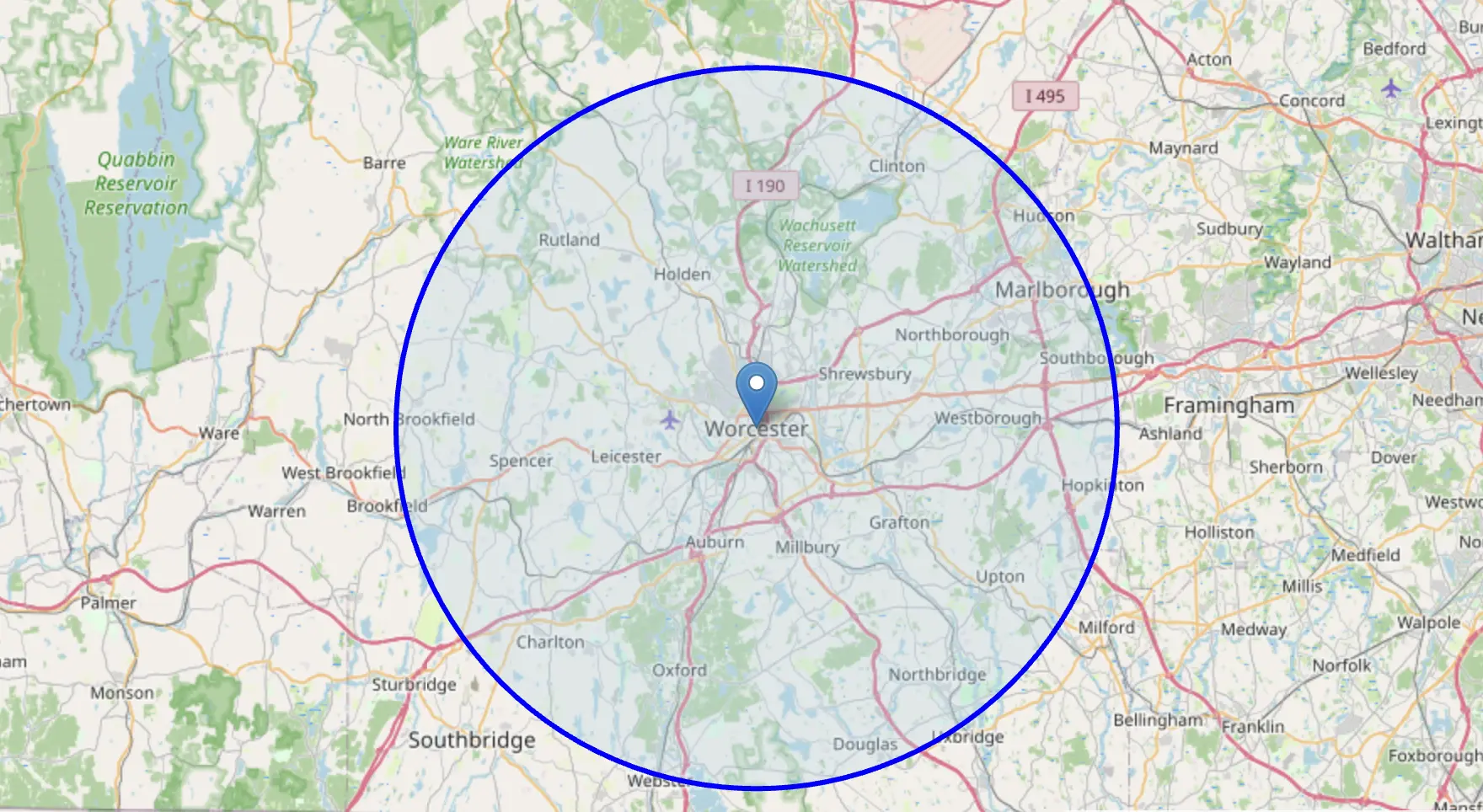
Find local details for each community on our service-area pages.
Frequently Asked Questions
Which Grafton homes are on septic?
The ones between and beyond the villages. Grafton runs its own sewer system with a treatment plant in South Grafton, and the village centers are largely served. The farm roads, the newer subdivisions on former orchard and pasture land, and the town's rural stretches run on private septic systems.
Who handles septic permits in Grafton?
The Grafton Board of Health, under the state's Title 5 code. Soil testing, system designs, and construction permits for repairs and replacements all move through that office.
How does scheduling work for Grafton?
Grafton is about 20 minutes southeast of Worcester via Route 122 or Route 140, comfortably inside the regular service area, and North and South Grafton book the same as the town center.