Septic Services in Auburn, MA
Auburn’s septic story is about the streets the sewer never reached, and the odd position their owners are in.
Most of the town made the switch long ago. Sewer is available to roughly 85 percent of Auburn, and the town’s system is collection-only: a network of mains and a dozen pump stations that move everything to the regional treatment plant across the line in Millbury. The postwar ranches and capes that filled in along the Route 12 and Route 20 corridors, Auburn’s signature housing, are mostly on that network.
That leaves the exceptions, and the exceptions are where the septic work lives. Outlying streets, the larger lots toward the town’s edges, and pockets the mains bypassed still run their own septic tanks and drain fields. Many of these systems date from the same postwar decades as the houses above them, which puts them at sixty-plus years old, the age where concrete baffles have dissolved and original drain fields are running on borrowed time.
Owning septic in a mostly sewered town has a particular flavor. When a system here reaches the end of its life, the question is not automatically “build a new one.” Sometimes the sewer is in the street out front, and the Auburn Board of Health, which enforces the state’s Title 5 code in town, has a say in which direction the property goes. That makes findings unusually valuable in Auburn: an evaluation that establishes what the system actually needs is the difference between choosing a path and being shoved down one, especially when a home sale is forcing the timeline.
The work Auburn generates
Two calls dominate. The first is the transfer inspection: Auburn’s septic homes sell into the same hot Worcester-area market as everything else, and each sale needs its Title 5 report. Because the septic housing stock here skews old, these sale inspections turn up real findings more often than in younger towns, which is an argument for scheduling them the week the listing goes up, not the week of closing.
The second is the end-of-life question on aging systems, backups and wet yards on original postwar installations. Those calls start with an evaluation that opens the tank and reads the field, because on a sixty-year-old system the difference between a failed baffle and a spent field is the whole decision.
In between sits the quiet work, pumping and component repairs, for owners keeping good systems good. Coverage is about as convenient as it gets: Auburn touches Worcester’s southern line, ten minutes down Route 12, and the full service list applies without an asterisk.
Our Services
-
Septic Inspections
A proper inspection opens the system up and looks: tank condition, components, levels, and how the drain field is taking water.
Learn more
-
Real Estate Septic Inspections
Buying or selling a home on septic usually means the system gets inspected, often on a deadline.
Learn more
-
Septic Tank Pumping
Routine pumping removes the solids the system can't break down. It's the single most important maintenance a septic system gets.
Learn more
-
Septic Repairs
Lids, baffles, filters, distribution boxes, pumps, floats, alarms: the components that fail before the system does.
Learn more
-
Drain Field Repair & Restoration
The drain field is where most septic systems actually fail, and where the biggest repair decisions get made.
Learn more
-
Septic System Replacement & Installation
When a system is truly at the end of its life, replacement is a designed, permitted project rather than a bigger repair.
Learn more
Areas We Serve
- Worcester
- Shrewsbury
- Auburn
- Millbury
- Holden
- West Boylston
- Grafton
- Leicester
- Paxton
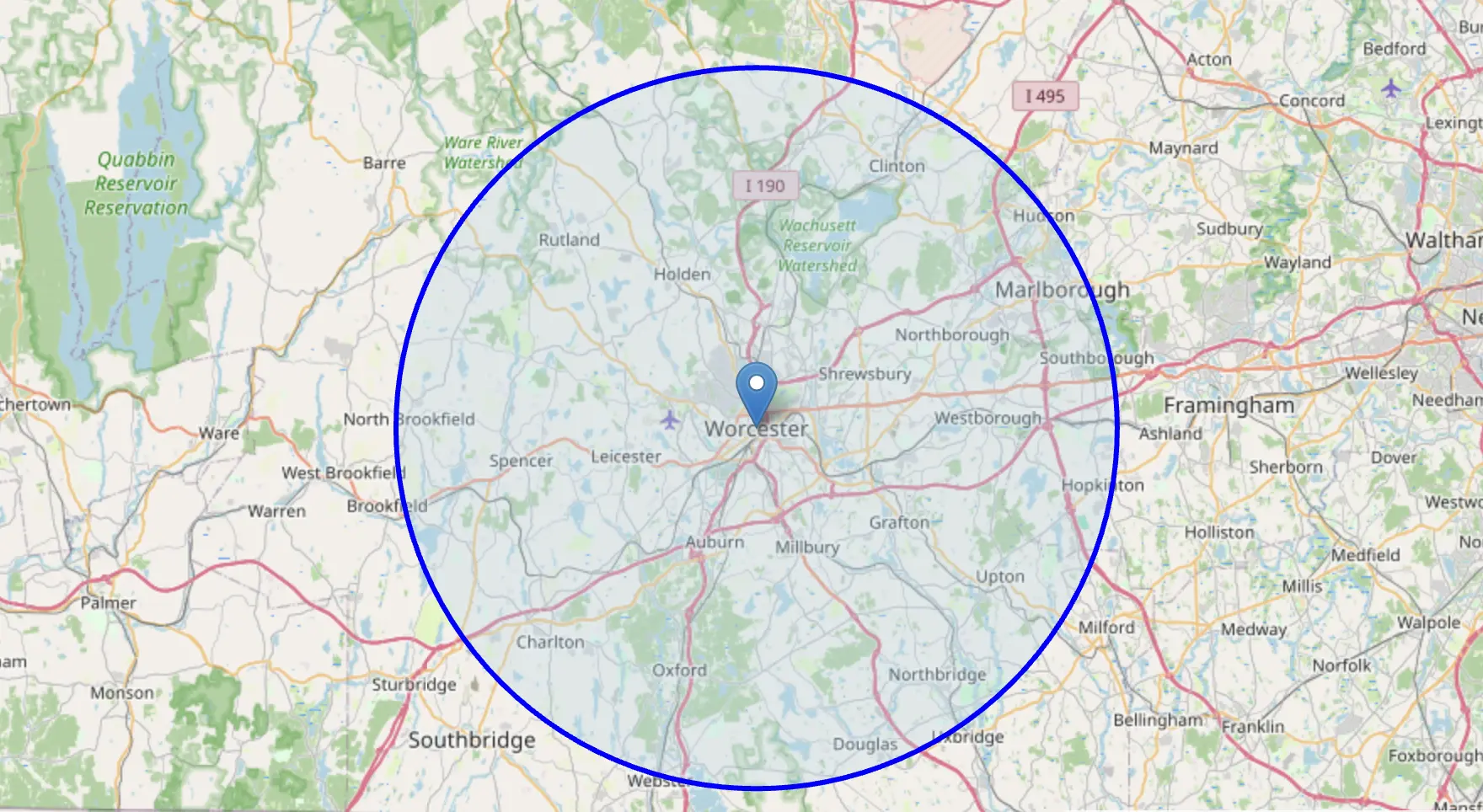
Find local details for each community on our service-area pages.
Frequently Asked Questions
Does Auburn have town sewer or septic?
Sewer is available to roughly 85 percent of the town, with Auburn's collection system pumping everything to the regional treatment plant in Millbury. The rest of the town, mostly outlying streets and larger lots, runs on private septic systems.
My street has sewer but my house is on septic. What happens when my system fails?
That becomes a conversation with the Auburn Board of Health. Depending on the street and the situation, the options can include connecting to the sewer or building a new septic system, and the board's requirements decide which paths are open. It is worth having an evaluation in hand before that conversation.
How fast can Auburn be scheduled?
Auburn borders Worcester to the south, roughly a 10-minute drive down Route 12, so it schedules like home territory.